Skip to content
Life Sad Poetry in Urdu – Echoes of a Lonely Heart

Introduction
Life sad poetry in urdu is the silent struggles, emotional wounds and unspoken realities of human life. It shows the pain that life itself brings—disappointments, loneliness, mistrust, and the feeling of being misunderstood. This is the case with life-sad poetry in urdu which is unlike poetry that only deals with romantic loss; it goes even deeper into the sorrows of living, where emotions are formed by time, experiences, and repeated hardships. These verses are very much in tune with the real-life emotions that a lot of people have locked away silently in their hearts.
 Follow WhatsApp Channel
Sad Urdu poetry has always been part of the mainstream of literature because of its emotional depth and fine expression. By way of soft but powerful words, poets portray sorrow with dignity and honesty. It doesn’t really matter if it is the pain of separation, the loneliness of being unheard or the exhaustion of living with life’s difficulties—sad urdu poetry turns pain into expression full of meaning. The readers very often sense an instant connection, almost as if the poetry is speaking to them about their own experiences.
A poem about sad solitude deals with the emotional burden that loneliness brings. It portrays the sense of being alone even when one is with others, the quietness that comes after relationships have ended, and the void that is created by relations that have been lost. Life sad poetry in urdu often mixes very well with alone sad poetry, thus presenting solitude as not only physical isolation but also emotional distance and silence within.
In the contemporary digital era, urdu sad poetry has reached a point of being extensively disseminated through social media, text messages, and captions. The use of short verses in this form of poetry is one of the main reasons why it has gained so much popularity, since it allows people to disclose very intimate feelings without the need of an explanation. Life sad poetry in urdu and alone sad poetry fit the bill perfectly, and so, they have been the most sought-after forms of poetry, as they offer solace and understanding in just a few lines. These lines usually turn out to be a quiet way of communicating what is inside the heart but cannot be said out loud.
A very strong trait of life sad poetry in urdu is its capacity to heal. The act of reading such poetry makes people concerned about their pain and realize that they are not the only ones suffering. It offers emotional release, empathy, and a feeling of connectedness among people. Urdu sad poetry has continually delivered the message that suffering is an inherent part of existence and that the ability to articulate it is a hallmark of emotional robustness.
In the end, sad poetry in urdu is not only about melancholy—it is about honesty. It portrays the emotional truth of existence and speaks to those feelings that are very often suppressed. By way of urdu sad poetry and alone sad poetry, suffering gets turned into art, and silence turns into communication.
میری ہر کسی سے بنتی نہیں
اور مجھے میری یہی عادت پسند ہےMeri har kisi se banti nahi
Aur mujhe meri yahi adat pasand hai
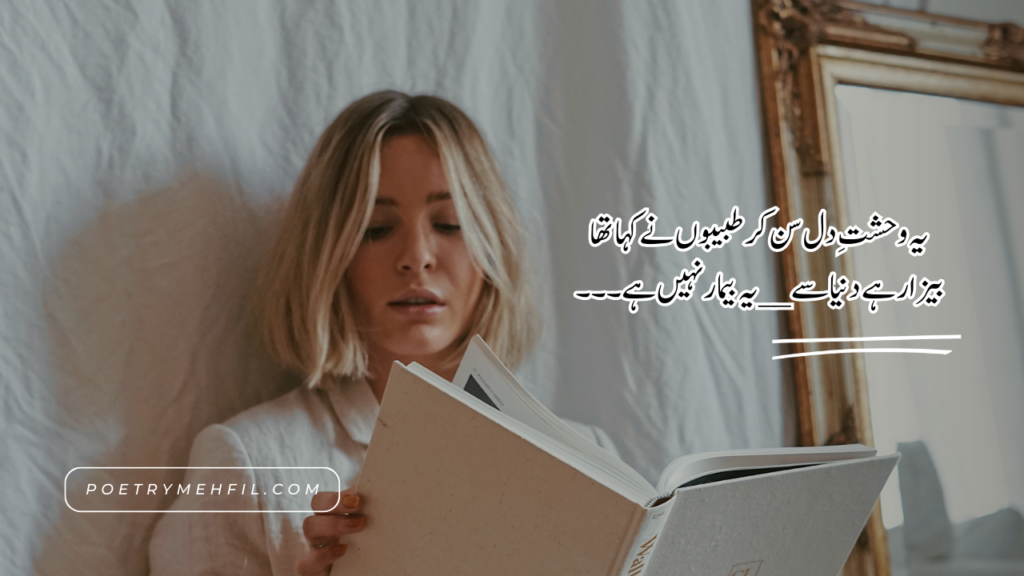
بڑے ہی سُخن ساز ہیں وہ سنّاٹے
سکوتِ شب میں جو ہم سے کلام کرتے ہیںBaray hi sukhan saaz hain woh sannatay
Sukoot-e-shab mein jo hum se kalaam karte hainسب رفتگاں کو بھولنے آۓ ہمارے پاس
ہم سے کسی کو پہلی محبت نہ ہوئیSab raftagaan ko bhoolne aaye humare paas
Hum se kisi ko pehli mohabbat na huiاکیلے تھے اچھے تھے
لوگ ملے، سب الجھ سا گیاAkela tha acha tha
Log mila sab ulaj sa gayaفقط اک تنہائی ہے
جو ہمیشہ ساتھ دیتی ہےFakat aik tanhai hai
Jo hemsha sath deti ha
Every tear tells a story, and every sigh carries a hidden memory. Urdu sad poetry is like a mirror of the soul, capturing the pain of separation, the ache of broken dreams, and the burden of unspoken words. Through these verses, one finds the courage to cry, heal, and move forward despite the weight of sorrow.
کتنے غمگین ہیں یہ
باہر سے ہسنے والے لوگKitna gumgeen hain yeah
Bahir sa hasna wala log

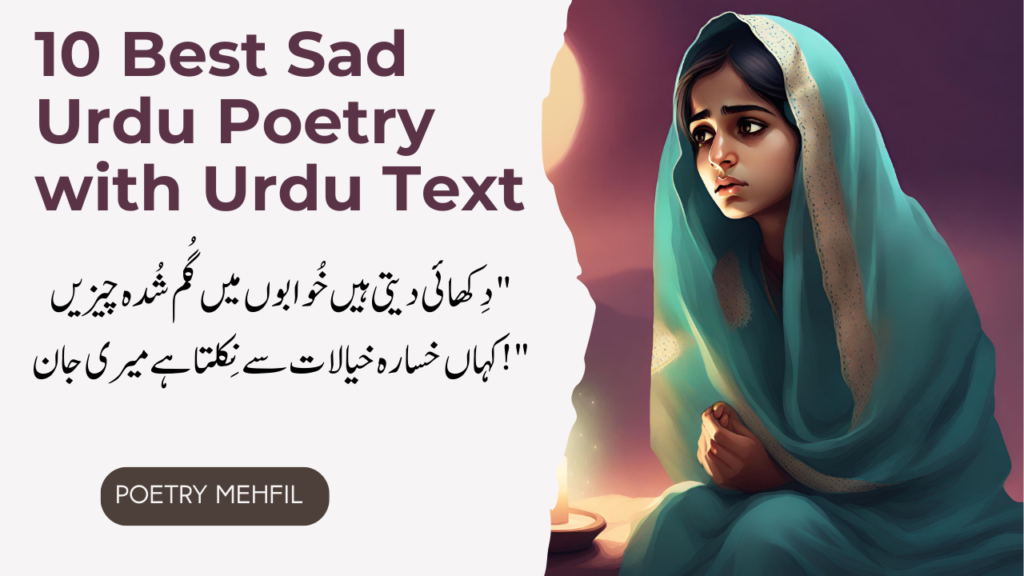
سب خساروں کو جمع کر کے یہ حاصل نکلا
دلِ ناداں کی کوئی بات نہ مانی جائےSab khasaron ko jama kar ke yeh hasil nikla
Dil-e-nadaan ki koi baat na maani jayeبہت دنوں بعد آج میرا دل یہ سوچ کے رو دیا
ایسا کیا پانا تھا مجھےجو میں نے “خود” کو کھو دیاBoht dino bad aj mera dil ya soch ka ro diya
Aisa kiya pana tha mujhe jo mein na khud ko khoo diyaشکوہ کرے ہم غیروں سے کیاخود سے ہووئے اجنبی
چلنے کو آگے رستہ نہیں لائی کہاں زندگیSihkwa kara hum geroo sa kiya khud sa huaa ajanabi
Chalna ko aga rasta nahi lai kahn zindgiاسے کیا خبر “میری ذات” کی
اسے کیا پتا میرے حال کاUsay kiya khabar meri zaat ki
Usay kiya pata mera haal ka
Alone, sad poetry has its own depth where the world seems silent, and only the heart beats with unanswered questions. The emptiness of nights, the longing for lost moments, and the heavy silence of life are all painted through words. This kind of poetry is not just about sadness; it is about the strength that rises quietly from solitude.
Final Words
Urdu sad poetry continues portraying the struggles of life with sincerity thus capturing hearts. Depth and elegance characterize the feelings of loss, loneliness, and endurance that are being expressed through urdu sad poetry. Alone sad poetry points out the unvoiced torture of seclusion advising the audience that the feeling of being alone is a common experience of humanity. Apart from that the three genres of poetry provide consolation, bonding, and healing thus claiming that words have the ability to comprehend and calm the heart even in sad moments.