Skip to content
Urdu Sad Poetry 2 Lines – Heart-Touching Verses


Introduction
Urdu sad poetry 2 lines beautifully captures deep emotions in the simplest form of words. These short couplets reflect pain, loneliness, broken relationships, and unspoken feelings that many people experience in life. Two-line Urdu poetry has a unique power to say more with less, making it easy to connect with readers instantly. Whether it is about lost love, silent tears, or emotional struggles, sad poetry in Urdu speaks directly to the heart. Many people search for 2-line Urdu poetry to copy and paste to express their emotions on social media, in statuses, and in bios. The beauty of this poetry lies in its simplicity and depth. Every couplet feels personal and relatable. Poetry in Urdu has always been known for its emotional richness and timeless appeal. Sad poetry, especially in short form, leaves a lasting impact. These verses turn pain into art. Readers find comfort in words that mirror their own feelings. That is why Urdu sad poetry remains popular across generations. It is not just poetry; it is an emotional experience.
 Follow WhatsApp Channel

یہ مجھے چین کیوں نہیں پڑتا
ایک ہی شخص تھا جہاں میں کیا
Yeah mujhe chain kun nahi pharta
Aik hi shakash tha jahan mein kya
دل نااُمید تو نہیں، ناکام ہی تو ہے
لمبی ہے غم کی شام، مگر شام ہی تو ہے
Dil na umeed toh nahi nakam hi toh hai
Lambhi hai gham ki shaam magar sham hi toh hai
اب کے ہم بچھڑے تو شاید کبھی خوابوں میں ملیں
جس طرح سوکھے ہوئے پھول کتابوں میں ملیں
Ab ka hum bichad toh shahid kabhi khawabon mein mila
Jis tarha shukaa hua phool kitaabo mein mila
ہم نے مانا کہ تغافل نہ کرو گے لیکن
خاک ہو جائیں گے ہم تم کو خبر ہونے تک
Humne mena ka tagaful na karo ga lakin
Khaak ho jaye ga hum tumko khabar hona tak
زندگی یونہی بہت کم ہے محبت کے لیے
روٹھ کر وقت گنوانے کی ضرورت کیا ہے
Zindagi yunhi boht kam hai muhabbat ke liye
Rooth kar waqat gawane ki zarurat kya hai
وہ جو ہم میں تم میں قرار تھا، تمہیں یاد ہو کہ نہ یاد ہو
وہی یعنی وعدہ نباہ کا، تمہیں یاد ہو کہ نہ یاد ہو
Woh jo hum mein tum mein qarar tha tumhe yad ho ka na yad ho
Wohi yani wada niba ka tumhe yaad ho ka na yaad ho
ہم تو سمجھے تھے کہ ایک زخم ہے بھر جائے گا
کیا خبر تھی کہ رگِ جاں میں اتر جائے گا
Hum toh samjha tha ka aik zahkam ha bhar jaye ga
Kiya khabar thi ka rag-e-jaa mein utar jaye ga
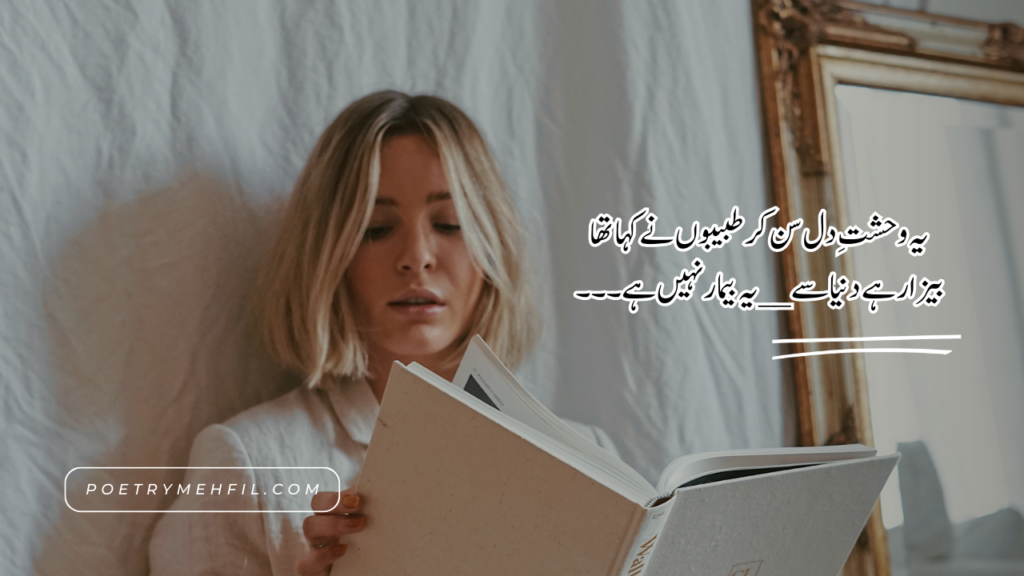
دل سے اٹھتا ہے دھواں سا کوئی
وہ خیال آتا ہے تو آتا ہے
Dil se uthata hai dhoonwa sa koi
Woh khiyal ata hai toh ata hai
اب نہ وہ شور نہ وہ شوق نہ وہ وحشت ہے
چپ ہیں جیسے دلِ برباد کو عادت ہو گئی
Ab na woh shoor na woh shok na woh washat hai
Chup hai jesa dil-e-barbaad ki adat ho gai
روئیں گے ہم ہزار بار، کوئی ہمیں ستائے کیوں
دل ہی تو ہے نہ سنگ و خشت، درد سے بھر نہ آئے کیوں
Royien ga hum hazar bar koi humay sitay kun
Dil hi toh hai na sang-o-washt dard se bhar na ay kun

These lines refer to the heart that is imprisoned between memory and loss, when peace is lost, as one man turns into the whole world. They are mirrors of the silent pain of love that dies gradually and leaves no answers and no cured wounds. Separating makes individuals’ memories like dried flowers that are between the pages of old books. At least there is hope, yet it is feeble in comparison with the long evenings of sorrow. The agony in this case is not nocturnal; it is long-suffering, enduring, and embedded in the soul. Words spoken yesterday seem so far away, and the act of being neglected is worse than being rejected. Time goes by, and the injuries become bigger rather than getting better. Chaos is substituted with silence, and the heart is trained to live with its fractures. This poetry reflects the truth about love, which never dies; it just transforms itself to desire and silent grief.
جانے والے کو چاہے کتنا بھی روکو
وہ چلا ہی جاتا ہے آپ کی زندگی سے
Jana wala ko chahy kitna bhi roko
Woh chala hi jata hai apki zindgi se
اگر نفرت کے قابل تھا تو نفرت سے مار دیتے
کیوں اپنی محفل میں بلا کر پیار سے پوچھا، تم کون ہو؟
Agar nafrat ke qabil tha toh nafrat se mar deta
Kun apni mehfil mein bula kar pyar sa poucha tum kon ho?
تجھ کو بھی چھوڑ کے جائے تیرا اپنا کوئی
تو بھی اک روز مـــــــکافات کا مطلب سمجھے
Tujko bhi chor ka jaye tera apna koi
Toh bhi aik roz makfat ka matlab samja
کبھی فرض تھے ہم بھی کسی پر ہر وقت
پھر رفتہ رفتہ قضاء ہوتےگئے،بےوجہ ہوتےگئے
Kabhi farz tha hum bhi kisis par har waqt
Phir rafta rafta qaza hota gay bewaja hota gaya
دل میں دبی ہوئی ہیں کتنی کہانیاں
ہر سانس جیسے ایک ادھوری داستاں ہے
Dil mein dabi hoi hain kitni khaniya
Har saans jesa aik adhuri dastaan hai

اک تم کہ دل میں درد کسی غیر کے لئے
اک ہم کہ درد بن گئے خود آپ کے لئے
Aik tum ka dil mein dard kisi gair ka liya
Aik hum ka dard ban gay khud apka liya
اپنے وقت کے ہم بھی بادشاہ ہوا کرتے تھے
پر عشق کی راہوں میں آکر حالات زندگی تبدیل ہو گئے
Apna waqat ka hum bhi badshah hua karta tha
Par ishaq ki raho mein akar halat zindagi tabdeel ho gay
کوئی ایک ہی غم عمر بھر کا روگ تو نہیں بنایا جاتا
زندگی ہے، پھر سے رواں دواں کرنی ہی پڑتی
Koi aik hi gham umer bhar ka rog toh nahi bnaya jata
Zindagi ha phir se rawa dawa karni hi pharti
اب فقط میں ہی رہوں پامالِ خیالِ فراق
یار تُم بھی تو کُچھ ڈَرو کھونے سے مُجھے
Ab faqt mein hi rahu pamaal kiyal-e-farak
Yar tum bhi toh kuch daro khona sa mujhe
کتنا تکلیف دہ ہوتا ہے وہ لمحہ جب آپ کو
کسی سے گفتگو کی طلب ہو لیکن وہ میسر نہ ہو
Kitni takleef da hota ha woh lamha jab apko
Kisi se guftguu ki talab ho lakin woh mayasir na ho
Conclusion
If you love urdu sad poetry 2 lines, these verses can become the voice of your heart. Short, simple, and deeply meaningful, this poetry is for anyone who wants to express intense emotions in very few words. Save this collection, share it, and let poetry speak what your heart cannot say aloud.
FAQs
Q1: Why is Urdu sad poetry of 2 lines so popular?
Because it expresses deep emotions in very few words.
Q2: Can this poetry be used for copy-paste?
Yes, it is perfect for 2 line Urdu poetry copy paste.
Q3: Can I use this poetry for status or bio?
Absolutely, it works perfectly for WhatsApp, Instagram, and Facebook.
Q4: What topics does sad poetry usually cover?
Loneliness, love, separation, pain, and life’s harsh realities.
Q5: Is this poetry originally from Urdu?
Yes, all verses are translated from original Urdu poetry.
Q6: Can I use this poetry on my blog?
Yes, it is suitable for personal or non-commercial use.