Skip to content
The Power of Two Lines—When Emotions Find a Voice


Introduction
Sadness is a common feeling that everyone worldwide can relate to, and the expression of it through poetry has been the mainstay of Urdu literature. Of all the Urdu poetry forms, such as ghazals, nazms, and ruba’ies, the 2-line sad poetry in Urdu occupies a unique position owing to its straightforwardness and emotional intensity. The poets have just to write two lines to express the deepest sorrow, betrayal, and unvoiced feelings, which otherwise might take many pages to narrate. This very feature of brevity makes the form highly relatable, sharable, and, of course, powerful, so the feeling can be felt by the reader instantly.
 Follow WhatsApp Channel
Besides two line couples, sadness poetry in Urdu presents a more profound examination of the inner world. The pain of being lovelorn, disloyalty, solitude, and the bitter pill of life’s pies are all embodied in these lines. Urdu, regarded as the language of feelings, provides the poets a venue to express grief in a manner that softens the heart, utilizes sympathy, and builds a bridge between the writer and his reader. A line is turned into a mirror that reflects personal experiences, recollections, and emotional battles, thus making it everlasting and global.
Sad Urdu poetry is not just a matter of choice of words; it is a means of communication that resonates with everyone irrespective of their lifestyle. Short couplet, or full-length poem—sad Urdu poetry in any form helps people who are not able to express their feelings freely. It offers them a refreshment, a solace, and a sense of commonality, which, in turn, makes them realize that sadness is just part of life and that emotions, when expressed through poetry, get a beauty and meaning.
In the modern digital era, 2 lines of sad poetry in Urdu, sad poetry in Urdu, and sad Urdu poetry are the most popular forms of publications through social media platforms, WhatsApp statuses, and poetry websites. The readers are searching for lines that reflect their inner feelings, and in this way, they get both comprehension and emotional release. The poems of this genre do not only express sorrow but at the same time turn it into a piece of art, making the feeling of loss relatable, beautiful, and poetic.
Be it for a very short duration of heartbreak or for a long-term sadness, Urdu sad poetry is always there to express the inexpressible. It links the personal feelings with the universal experiences, thus making it easier for the readers to feel, contemplate, and heal through the words.
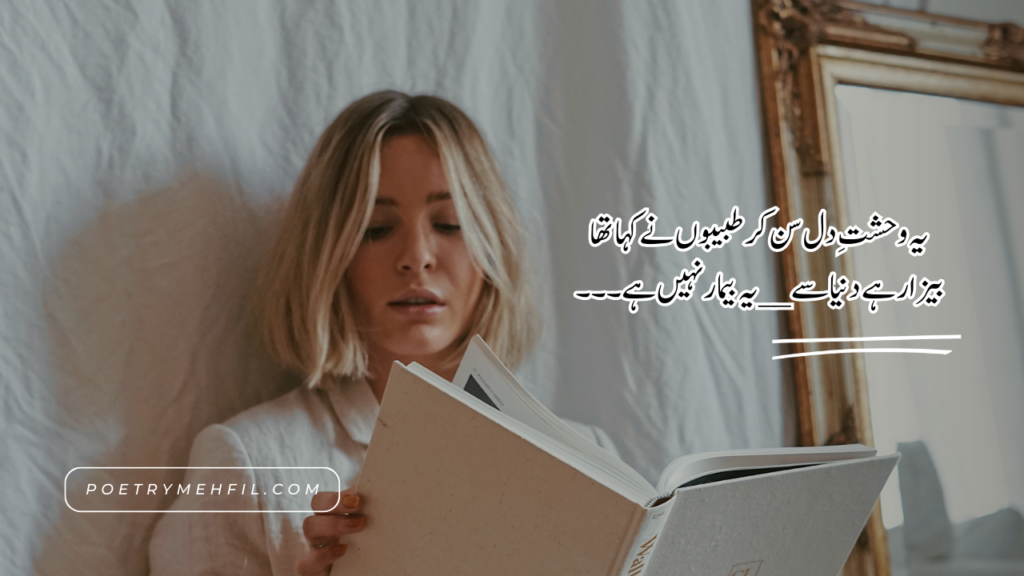
نہ وہ وقت رہا ، نہ وہ شوق رہے
نہ وہ ضد رہی ، نہ وہ ہم رہےNa woh waqt raha na woh shok raha
Na woh zid rahi na woh hum rahy

تنہا ہار جاؤ
مگر سہاروں کے عادی نہ بنوTanha har jao
Magar seharo ka adii na bnoصبر کرتے کرتے
ساری خواہشیں ہی ختم ہو گئیSabar karta karta
Sari khawishien hi katam hogiمیرے اندر کی کہانی سے نا واقف لوگ
کہتے ہیں کہ یہ لڑکا اپنی انا میں رہتا ہےMera andar ki khani sa na wakif log
Kheta ha ka yeh larka apni ana ma rehta haمیں نے لوگوں سے متاثر ہونا چھوڑ دیا
کیونکہ لوگ وہ نہیں ہوتے جو نظر آتے ہےMein na logo sa matasir hona chor diya
Kunka log woh nahi hota jo nazar ata hai
Sad poetry in Urdu has a special charm that no other language can replicate. The soft flow of Urdu words, combined with their emotional depth, gives life to pain and heartbreak in the most beautiful form. From classical poets like Mirza Ghalib and Faiz Ahmed Faiz to modern writers, sad Urdu poetry has always been a way to express grief with grace. These verses show that pain is not always weakness—it is a sign of how deeply one has loved.
گرنے سے ڈرنا نہیں، اُٹھنا سیکھو
اندھیروں سے لڑ کے روشنی لکھوGirna sa darna nahi uthna sihko
Andhero sa lar ka roshni lihko

بہت ڈھونڈا تجھے ان راہوں پر
جن راہوں پر کبھی ہم ملا کرتے تھےBoht dhoonda tujhe in rahoo par
Jin rahoo par kabhi hum mila karta tha
محبت میں وفا ڈھونڈنے کی غلطی نہ کرنا
یہ دریا ہے، یہاں کنارے نہیں ہوتے
Mohabbat mein wafa dhoondhne ki ghalti na karna
Yeh darya hai, yahan kinare nahi hotay
کاش کوئی سمجھ پاتا میرے خاموش رہنے کی وجہ
یہ خاموشی بھی ایک فریاد ہےKaash koi samajh paata mere khamosh rehne ki wajah
Yeh khamoshi bhi aik faryaad hai
ہم نے ہار کر بھی جیتنے کی کوشش کی
مگر وہ دل ہی نہ جیت پائےHum ne haar kar bhi jeetne ki koshish ki
Magar woh dil hi na jeet paaye
Love and pain often walk together, and Urdu poetry captures this bond perfectly. When love turns into loss, poets turn tears into art through 2-line sad poetry in Urdu. These verses remind us that heartbreak is not an end but a new beginning of understanding and self-growth. The emotional rhythm of Urdu words gives comfort to the broken-hearted and turns sorrow into timeless beauty.
Conclusion
Sad poetry is a classic art form that puts the feeling of human emotions on the spot, whereas 2 lines sad poetry in Urdu provides an immediate emotional response, whereas sad poetry in Urdu and sad Urdu poetry investigate the humanness and intricacy of sorrow in a more detailed manner. These poetic phrases give solace, sympathy and a feeling of relatedness to the readers who are undergoing sadness. They make the personal mourning a common human experience, and the emotions are experienced, perceived, and enjoyed. Urdu sad poetry remains a strong means of expressing the heart making pain beautiful and words eternal art.