Skip to content
Sad Poetry About Love, Lonely Nights, and Hidden Pain Smiles

Introduction
Sadness the most powerful and somehow the hidden emotion of the breakup, splitting, and the longing for each other, are captured in love poems. Love, in all its splendor, sometimes leaves invisible scars that are covered up with faint smiles and polite conversation. It is easily during the lonely nights without you that the heart senses the absence more than ever. Poems of love, pain, heartache and longing are depicted through these silent moments and words, and all the quiet despair that occasionally is not conveyed by words alone.
 Follow WhatsApp Channel
You are the one whose absence is felt deeply in this poetry, reflecting the emptiness and solitude felt when a loved one is far away or gone forever. These lines touch very intimately every soul that has suffered love because, as a general rule, the intensity of absence equals that of presence. The pain hidden behind the smiles motif is another very powerful one, where we see that a heartbreak is covered ever so often by a calm exterior. People are going on with their lives but their hearts have to carry the burden of unrequited love quietly.
Love-gone-wrong poetry does not only convey sadness; it also opens a way for a person to deal with his/her feelings, get empathy, and find companionship through others who have been through the same. The use of vibrant tropes and poignant phrases in the poems turns a private loss into a public witness of the deep human experience. A line in such a poem is then a reminder that love in whatever form still has the power to enkindle, wound, and eventually teach the art of being resilient.
In the contemporary age, the sad love poetry is phenomenally communicated through texts, social media, and captions, granting a platform for the shy ones to let their feelings out. The lonely nights without you or the hidden pain behind the smiles versus offer both an emotional outlet and a connection, thus closing the gap between the individual experience and the common understanding.
In the end, one can say that love of sorrowful poetry is not merely a way of expressing sadness; it is proof of the human heart’s depth and its fragility. It portrays the beauty of love, the agony of parting, and the quiet power required to stand firm.
کسی کے دکھ کو سن لینا بھی بڑا اجر والا عمل ہے
کیونکہ یہ دلوں کو ہلکا کر دیتا ہےKisi ka dhuk ko sun lena bhi bara ajar wala amal hai
Kunka yeh dilo ko halka kar deta ha
غم کے دریا سے نکالے کوئی
مجھے جینا ہے، بچا لے کوئیGum ka dariya sa nikla koi
Mujhe jeena hai bacha la koiاپنی ہی محبت سے مکرنا پڑا مجھے
جب دیکھا اسے روتا کسی اور کے لیےApni hi muhabbat sa mukrna phara mujhe
Jab dehka usay rota kisi aur ka liyaاگر کوئی شخص جلد غمگین ہو جاتا ہو
تو یقین کریں اس کے دل کو بے رحمی سے تھکایا گیا ہےAgar koi shakash jald gamgeen ho jata ho
Toh yaqeen kare uska dil ko berehmi sa thakya gaya haiہم پر جو گزری ہے، تم کیا سن پاؤ گے
نازک سا دل رکھتے ہو، رونے لگ جاؤ گےHum par jo guzari ha, tum kiya sun payoo ga
Nazuk sa dil rahkta ho rona lag jao ga
There’s something about the night that makes the heart ache louder. When the world sleeps, my loneliness wakes. I lie beneath a ceiling that once watched us dream, but now only watches me wait. Your absence has become a presence of its own—filling the room, weighing down the air, tightening around my chest. I count stars like I used to count your smiles, but the sky is different now—colder, distant, unfamiliar. These nights, without your voice, without your hand in mine, stretch longer than time itself. And in them, I forget what peace ever felt like.
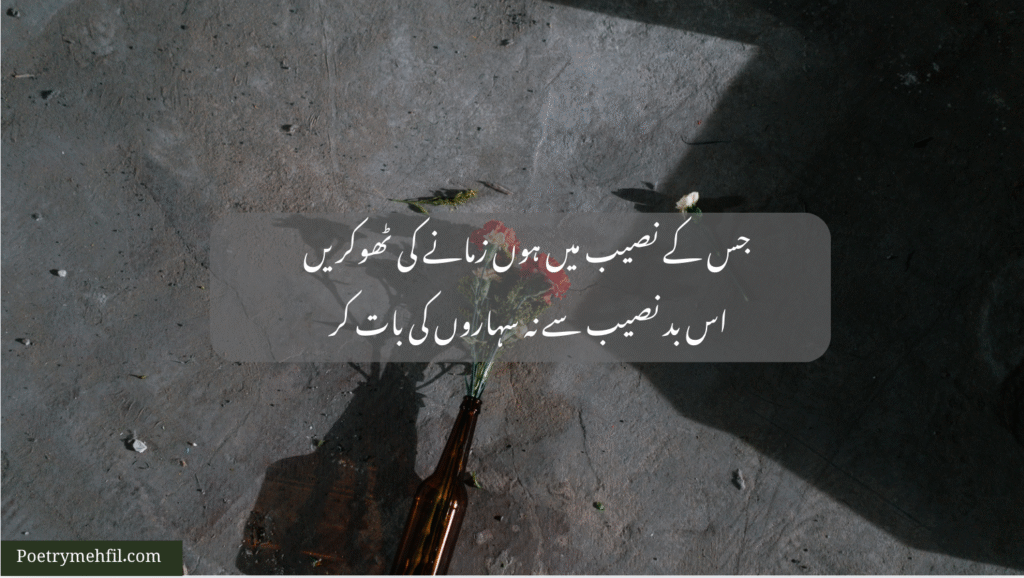
زندگی پھر نہ مسکرائی کبھی بچپن کی طرح
میں نے مٹی بھی جمع کی کھلونے بھی لے کر دیکھےZindgi phir na muskarai kabhi bachpan ki tarha
Mein na mitti bhi jama ki kholna bhi lakr dehka
وہ چھوڑ کر نہیں
روند کر گیاہےWoh chor kar nahi
Rond kar gaya haiمیں نے تمہیں دعا کی طرح مانگا
تم نے مجھے سزا کی طرح پایاMein na tumay dua ki tarha manga
Tumne mujhe saza ki tarha paya
میں نے تمہیں دل کی طرح رکھا
تم نے مجھے زخم کی طرح چھوڑاMein na tumay dil ki tarha rahka
Tumne mujhe zahkam ki tarha choraکسی سے مل سکو تو شکر کرو
کسی سے مل کر بچھڑنا بڑی اذیت ہےKisi sa mil sahko toh suhkar karo
Kisi sa mil kar bichadna bari aziyat hai
These lines convey the intense feelings of lost innocence, emotional betrayal, and unending separation. The poet contemplates the fact that life never smiled on him again as it did in childhood, even though he tried to get that innocence back through simple joys, which are symbols of the fact that time and experiences change the heart for good. The pain of forsaking is augmented with the thought that the loved one did not just go away but devastated the feelings left behind. Love is depicted as profoundly imbalanced—the poet gave his loyalty like a prayer, while the other saw it as a burden or punishment. The scenario in which one cherishes the other as one’s very heart and the latter is still treated like a hurt that is to be discarded brings to light the cruelty of emotions and the heart’s suffering. Ultimately, poetry puts it that getting to know a person is a gift, but then parting after getting attached is a real heartbreaker and one of the hardest things a heart can take.
Conclusion
Sad poetry about love has always had a vibrant impact on the hearts of people since it expresses the feelings that are mostly left unvoiced. The topics like sleepless nights and the emotional pain behind the laughter depict the silent battle of love, loss, and yearning. Through these lines, the readers can find comfort, kinship, and insight, and at the same time, they are reminded that love can still be expressed through art, that is, writing, and that poets have the ability to touch, heal, and connect with the innermost feelings of human hearts even in moments of heartbreak.